
How to Search the Hartford Court Docket
Hartford's official ticket search is the first stop. It takes two routes. One asks for a last name plus a ticket or case number; the other pairs a last name with a date of birth. Remember what the portal is: a citation lookup and payment tool, not a public register of motions and filings.
No match showing up? Call Magistrate Vernon Alford at 334-719-0565 or City Hall at 334-588-2245. Voice payment runs through 334-366-9875. For the current hearing date or a certified outcome, talk to the Municipal Court rather than trusting a payment result alone.
- Confirm that Hartford Municipal Court is printed on the ticket.
- Search with last name and ticket number.
- Use last name and birth date as a fallback.
- Review the exact citation and amount returned.
- Confirm the newest setting with the magistrate.
Hartford Ticket Search Routes
Enter the least amount of data the Hartford lookup needs. The ticket-number route is usually cleanest. Date-of-birth searching works too. But check any result against the paper citation before you pay, since common surnames can pull up the wrong person even when the form accepts what you typed.
The form itself is narrow. It opens no document viewer. It covers no date range, and it shows no full history of case actions. Questions about those gaps belong with the magistrate. Guesses about what an account might display after a payment answer nothing.
Two paths lead into a citation record. Ticket number gives precision. Birth date helps when the paper ticket is missing. So fill in both fields shown for whichever Hartford route you take.
| Route | Input | Result scope |
|---|---|---|
| Ticket | Last name and ticket or case number | Lookup and payment |
| Birth date | Last name and date of birth | Lookup and payment |
The Hartford lookup source shows the live form.
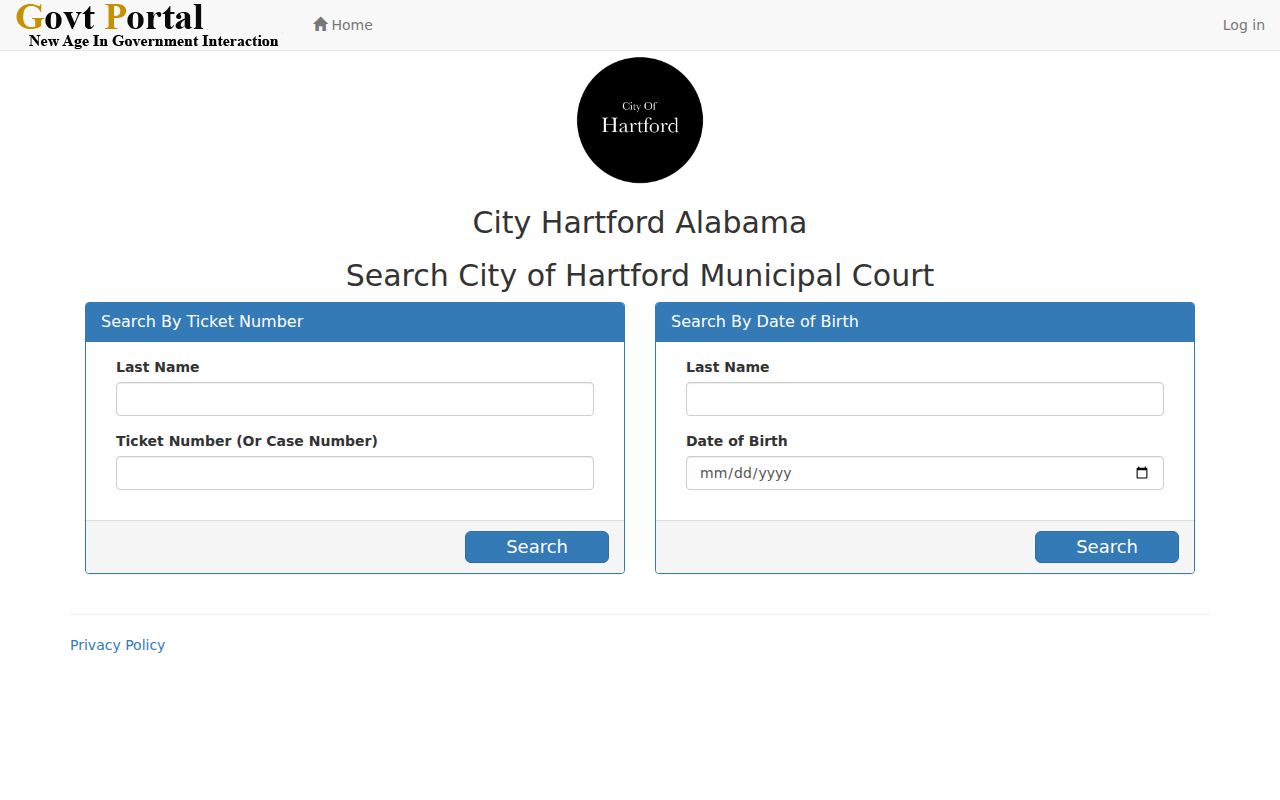
Have a ticket number or birth date in hand before starting the Hartford lookup.
The Hartford Municipal Court
Hartford Municipal Court handles city ordinance charges and municipal traffic citations. It does not take every case with a Hartford address. Felonies, state traffic tickets, and county charges go elsewhere. They land in Geneva County District or Circuit Court, depending on case type.
Sessions are held at the Johnny Hughes Community Center, 405 South Third Avenue. That address is not City Hall. City Hall sits at 203 West Main Street. City Hall keeps weekday hours, Monday through Friday, 8:00 a.m. to 5:00 p.m. Call 334-588-2245 or fax 334-588-3826 to reach the city offices.
Hartford Courtroom Is Elsewhere
Read a Hartford hearing notice closely. City Hall and the Hartford courtroom sit at different addresses. Court staff can tell you which one applies to you. The hearing may happen at the community center. Even so, a records request can begin with a phone call.
The mix-up is easy to make. You can reach Hartford and still walk into the wrong building. Municipal Court sessions meet in the Johnny Hughes Community Center. General city business runs through City Hall. Check the notice before driving, and call the magistrate if the location line is unclear.
Records follow their own path here. Start a request through the magistrate or the city contact even though hearings happen elsewhere. A courtroom is not a full-time records counter.
Hartford Court Dates and Settings
Hartford schedules Municipal Court sessions on a set pattern. Sessions fall on the second and fourth Tuesday of each month at 9:00 a.m. Treat that as background, not a promise. The newest citation, notice, or court instruction controls your specific Hartford case. A reset can leave an older date sitting in the case history.
| Date | The individual date shown by the latest Hartford notice. |
|---|---|
| Time | Published sessions begin at 9:00 a.m. |
| Location | Johnny Hughes Community Center, 405 South Third Avenue. |
| Judge | The judicial officer assigned to the municipal setting. |
| Setting Type | Plea, appearance, trial, review, or other stated event. |
Disagreeing dates? Call 334-719-0565 when the portal and the paper notice clash. A Hartford payment balance alone confirms nothing on the calendar.
Hartford Voice Payment Limits
Voice payment does one narrow job. It can settle an eligible Hartford amount, but it cannot stand in for the Hartford docket. The full docket may hold the charge, the setting, the plea, disposition, warrant action, and later financial entries that a spoken payment never displays.
Dial 334-366-9875 for the voice line. Then keep the receipt. When you need official proof of the outcome, ask the Municipal Court for a disposition, because a certified disposition comes straight from the court record and serves a different purpose than a payment confirmation. The Hartford payment portal supplies the online option.
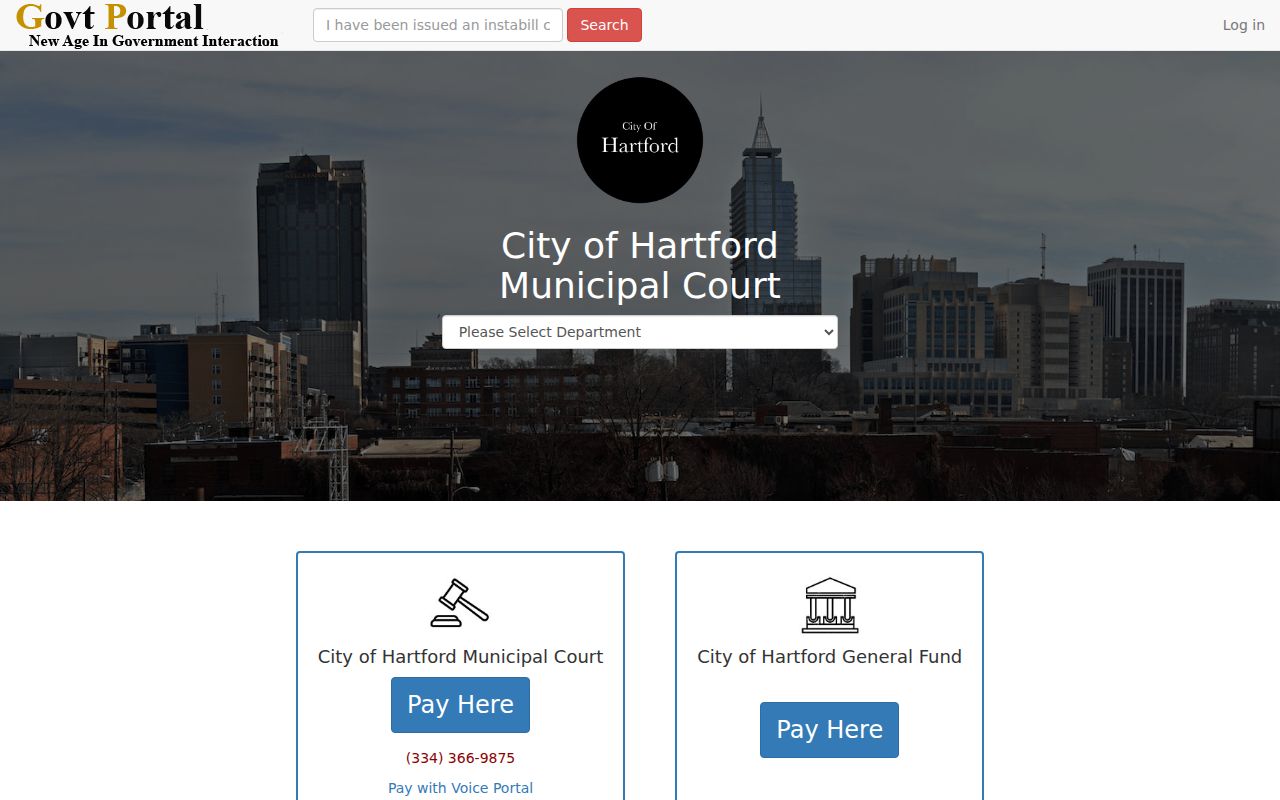
The Hartford portal image reflects Hartford’s payment access, not a complete docket viewer.
Hartford Traffic Tickets
Who wrote the ticket decides where it goes. A Hartford police citation assigned to Municipal Court uses the city lookup, the magistrate, and the city payment paths. A state trooper or county deputy ticket often belongs to Geneva County District Court instead. The court name printed on the citation answers that first routing question.
Paying a payable citation generally counts as a plea. To contest the charge, follow the appearance instructions instead of sending money. For the wider county paths, including state traffic channels, see Geneva County traffic court records.
Hartford Fees Have Separate Causes
Hartford costs pile up for separate reasons. A missed appearance triggers one charge. An alias warrant triggers another. The base fine stands apart from both of those add-ons, so never add every published figure to a single ticket. Read the Hartford case entries and ask the clerk for a current total instead.
Later action can change what you owe, too. The ordinance gives useful local categories, but only the court’s live record shows the actual amount for one case. Keep any receipt with the ticket number so staff can trace the transaction.
Hartford Ordinance 06-03-19 lists the added local costs: $10 upon a municipal-ordinance conviction, $33.50 for traffic violations, $68 for other misdemeanors, $50 for alias-warrant issuance, $10 for failure to appear, and $35 for bail-bond filing, plus statutory bond fees. Confirm the current total with the court.
| Entry | Published local amount |
|---|---|
| Ordinance conviction | $10 |
| Traffic violation addition | $33.50 |
| Other misdemeanor addition | $68 |
| Alias warrant | $50 |
| Failure to appear | $10 |
| Bail-bond filing | $35 |
An alias warrant is court process. It issues after a required appearance is missed or another legal basis arises. These Hartford amounts are distinct parts of the record, not one interchangeable base fine.
Where Hartford Cases End Up
Hartford Municipal Court handles the city tier. Geneva County District Court takes state misdemeanors, preliminary felony work, state traffic, small claims, and district civil matters. Circuit Court gets the felonies, the major civil matters, and the ordinary municipal appeal route.
Docket flow: Hartford Municipal Court › Geneva County Courts › Circuit Court
A Hartford municipal conviction may be appealed to Geneva Circuit Court. The window is 14 days, under Alabama Criminal Rule 30.1, for a trial de novo. Rule 30.4 then sets another clock. It requires the municipal record to be transmitted within 14 days after the appeal is perfected. Trial de novo means a fresh trial in circuit court. It is not a second look at the Hartford papers.
Hartford State Citation Check
A Hartford location is not always a Hartford case. The Hartford portal fits a Hartford police ticket. A county citation near Hartford uses the county system. Always read the court line before treating any Hartford search result as final.
The paper may name a state traffic service or Geneva County District Court. Then the Hartford magistrate may rightly show no city record. Use the county or state channel the citation shows. A municipal no-result is a forum clue, not proof that the citation was dismissed.
A damaged printed line leaves another option. The issuing agency can help you identify the court. It cannot change a setting or hand out a certified court disposition, because those acts belong to the court.
When a Hartford portal search returns nothing, look at the issuing agency. State citations and county-deputy tickets can bypass Hartford Municipal Court entirely. Call the court printed on the citation. The right forum check saves time and stops payment to the wrong system, and the Geneva County court docket explains the county court split one level deeper.
Hartford Appeal Record Terms
The Hartford municipal number covers only the Hartford phase. After an appeal, the Hartford transfer entries point toward a separate circuit file. Preserve the Hartford notice. Ask for the new circuit number too. Following that thread prevents mistaking an old Hartford date for the new circuit setting.
An appeal creates activity in two court files. The Hartford docket can show notice, bond, and transmission, and Circuit Court then opens its own docket for the new trial, so keep both identifiers when a municipal case moves.
- Trial de novo
- A new hearing of the case in Circuit Court.
- Alias warrant
- Court process that can issue after a missed required appearance.
- Disposition
- The recorded outcome of a charge or case.
- Record transmission
- The municipal clerk’s delivery of the case papers after appeal.
The Hartford clerk can explain where a record sits and how filing works. Staff cannot advise whether an appeal should be taken.
Hartford Record Copy Choices
Ask the court that made the record, not just the building. A Hartford police report, a municipal docket, and a Geneva County court file are three separate products. The magistrate keeps Hartford cases. The Circuit Clerk holds county matters only. Where you file never changes who keeps the city record.
Watch what happens on appeal. A Hartford case that moves up needs two requests: the municipal disposition and the receiving circuit number. Treat them as separate items. The city file explains the original charge and the transfer. The circuit record carries later settings and the trial de novo activity. The municipal file may keep its notice and transfer entries, so hold both case numbers and confirm the newest date with the receiving clerk. One portal result cannot replace both files.
Know what each paper proves. A payment receipt confirms a transaction. A court disposition states the recorded result. Those answer different questions. A full Hartford docket can also show settings, pleas, warrant events, and later financial entries that the vendor page never displays.
Call the magistrate with the ticket or case number and ask for the exact record you need. A plain copy just reproduces the filed material. A certified copy adds clerk authentication. Ask the recipient which form is required before you pay copy or certification costs. Keep a mailed request narrow: confirm the address, the current charge, and the return-postage procedure with Hartford staff first, and do not guess at fees or invent fields. If the Hartford portal returns no match, the cause may be a wrong court, a keying error, or a restricted record; the magistrate can point you to the right office and public procedure without opening protected content.
Public Access to Hartford Court Records
Start with the Hartford Municipal Court custodian. Ask by ticket or case number for the docket, a disposition, or a named filing. The magistrate line is 334-719-0565. The portal handles anonymous citation lookup. The counter and phone remain the fallback for dates and copies. Sealed matters, confidential records, juvenile information, and protected personal data stay restricted. Remote access can be narrower than counter access. No result may simply mean the wrong forum or a search-key mismatch.
Key access rules:
Alabama Rule of Court-Record Privacy 104 allows inspection and copying unless law, rule, or order restricts access.
Alabama Rule of Judicial Administration 30 governs clerk copies, certification, payment, and postage.
Alabama Code section 36-12-40 states the public-writings right subject to lawful exceptions.